Beyond Sight: Why the Greatest Architecture Is Never Just About What You See
A building is judged by its appearance. However, the spaces that stay with us are not just defined by sight alone. They are remembered for how they make you feel, from the experience of the scale of the corridor, the silence of well-insulated spaces overlooking the outdoors and the warmth of a material under touch, to the way a sequence of spaces unfolds. The greatest architecture, therefore, operates beyond the visual, engaging the senses and memory. This understanding increasingly informs commercial interior design and the architecture, where experience is shaped through multiple layers more than visual aesthetics.
This understanding informs a human centric approach to design at Confluence. Buildings are conceived as environments that are experienced through movement, light, sound, and climate. This begins with thermal comfort. Rather than relying solely on mechanical systems, passive strategies such as orientation, shading devices, daylight optimisation, and cross-ventilation are integrated early in the design process. These decisions shape how a space is experienced throughout the day, well-lit, and more comfortable to inhabit.
In projects like M3M Cullinan, this approach is evident in the use of brise-soleil, shaded arcades, and carefully aligned towers that reduce heat gain while allowing natural light and air to move freely. The design results in an energy-efficient, more balanced indoor environment where comfort is experienced intuitively.
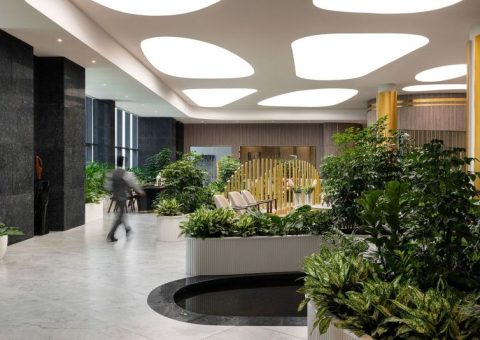
Acoustic quality, often overlooked but critical to everyday well-being, is equally important. The way sound travels through a space can influence how it is used and perceived. In residential settings, buffering noise while maintaining openness becomes essential. Spatial planning and material selection work together to create zones of calm within dense urban settings. In larger developments, strategic planting of trees, courtyards, water features, and planted buffers helps absorb and diffuse sound, enabling more composed spaces despite their scale.
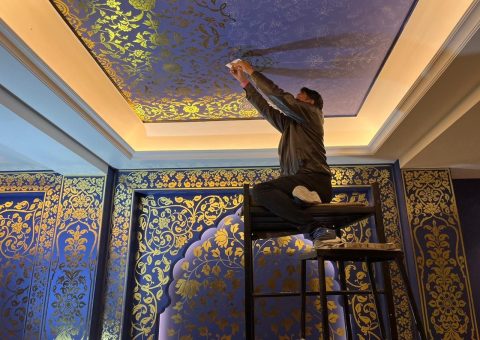
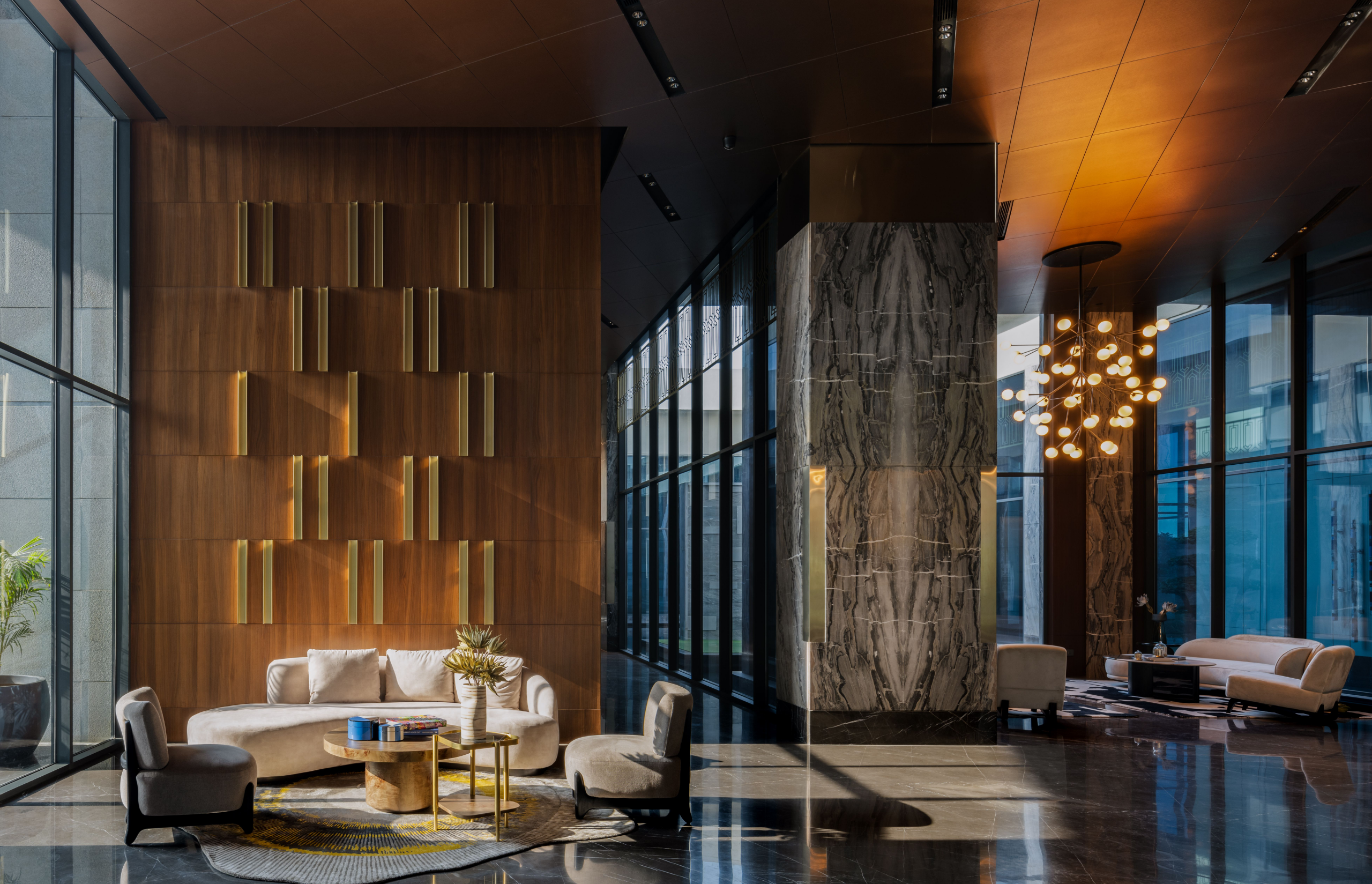
Materiality adds another layer to this sensory experience. Texture and finish influence how people physically engage with a space. At the commercial complex of M3M Cullinan, materials are selected for the atmosphere they create and their visual impact. Polished stone, wood surfaces, and controlled lighting work together to create a tactile, immersive environment. The contrast between smooth and textured surfaces allows users to perceive space through touch and movement, as well as sight. Such considerations are increasingly central to interior design for commercial environments, where engagement and memorability are key aspects of the user experience.
This extends to the spatial memory people use to recall and navigate environments. Layered, sequential architecture creates a stronger sense of connection. Exemplifying this approach, the design at the Gaur NYC Experience Centre unfolds as a spatial narrative, with curved walls, shifting volumes, and light transitions that guide visitors intuitively. The atrium serves as a central anchor, with interconnected zones revealed gradually, making movement seem natural rather than directed. These moments of transition and discovery shape how the space is remembered long after the visit. This emphasis on atmosphere, materiality, and sensory engagement is reflected in the work of leading luxury interior designers India has seen in recent years.
In residential projects such as Adani Veris, this idea translates into everyday living. Landscapes extend vertically, balconies become outdoor rooms, and shared spaces are embedded within the built form. These elements create a sequence of private and collective experiences that define how residents interact with their surroundings on a daily basis.
Designing beyond sight requires a shift in intent. It asks architects to consider what is seen, felt, heard, and remembered. Thermal comfort, acoustics, materiality, and spatial sequencing are fundamental to how architecture performs. When these elements come together harmoniously, architecture moves beyond being an image. It becomes an immersive and enduring experience.